On June 24, 2016, the British Pound dropped nearly 8% against the US Dollar overnight following the Brexit referendum result. In a matter of hours, travelers who had booked UK holidays found their Dollar budgets stretching significantly further, while British expats abroad saw their Pound-denominated savings lose substantial purchasing power. Currency volatility is not an abstract financial concept—it has real, immediate consequences for anyone dealing with foreign money. This guide explores why exchange rates fluctuate, what drives dramatic currency movements, and how you can protect yourself from currency risk.
What Causes Exchange Rates to Fluctuate?
Currency values are determined by supply and demand in the global foreign exchange market—the largest financial market on Earth, with daily trading volumes exceeding $7.5 trillion. When more people want to buy a currency than sell it, its value rises. When selling pressure exceeds buying interest, its value falls. But what drives these buying and selling decisions?
Interest rate differentials are among the most powerful drivers. When a central bank raises interest rates, international investors are attracted by higher returns, increasing demand for that country's currency. The US Federal Reserve, European Central Bank, Bank of Japan, and Bank of England each influence their respective currencies through interest rate decisions. Even the anticipation of a rate change can move currencies significantly before any actual policy action.
Economic data releases create regular pulses of volatility. Employment reports, inflation data, GDP growth figures, trade balance statistics, and manufacturing indices all provide signals about an economy's health. When these numbers surprise the market—either positively or negatively—currencies react immediately. A stronger-than-expected US jobs report, for instance, typically strengthens the Dollar because it suggests the economy is robust.
Geopolitical events introduce unpredictable volatility. Elections, wars, trade disputes, sanctions, and diplomatic crises can cause sudden, dramatic currency movements. The Russian Ruble lost over 40% of its value in early 2022 following international sanctions. The Turkish Lira has experienced repeated crises linked to political interference with monetary policy. Even rumors and speculation about potential events can move currencies.
Historical Examples of Currency Volatility
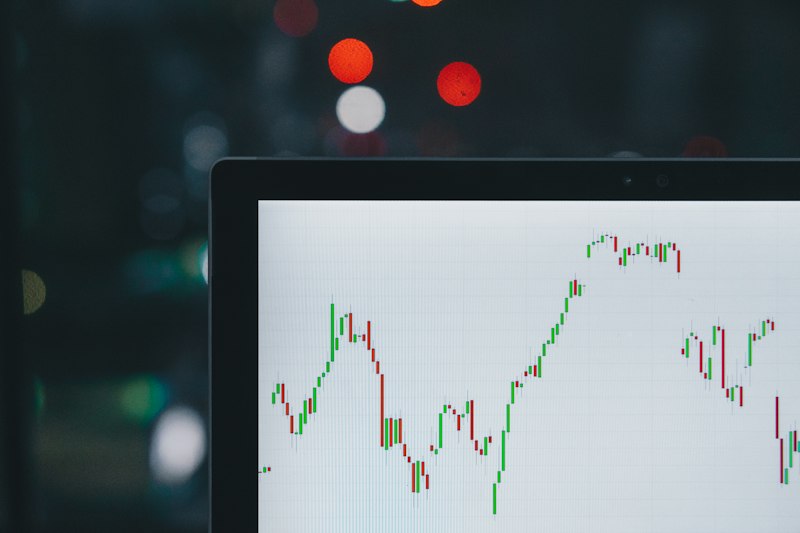
Understanding past episodes of currency volatility provides valuable context for assessing current risks. The Asian Financial Crisis of 1997 saw the Thai Baht lose over 50% of its value in months, triggering a contagion that swept through Southeast Asian currencies. The crisis demonstrated how quickly confidence can evaporate and how interconnected currency markets are.
The Swiss National Bank's decision in January 2015 to abandon its Euro peg caused the Swiss Franc to surge approximately 30% against the Euro in minutes—one of the most dramatic currency movements in modern history. Forex brokers went bankrupt, and businesses that had built their models around a stable CHF/EUR rate faced sudden, massive losses.
More recently, the COVID-19 pandemic created extraordinary volatility across all currencies. Safe-haven currencies like the US Dollar, Japanese Yen, and Swiss Franc initially surged as investors sought safety. Emerging market currencies, particularly those of commodity-dependent economies, experienced sharp declines. The pandemic illustrated how external shocks can override normal economic fundamentals.
How Volatility Affects Different Groups
For travelers, currency volatility creates both opportunities and risks. A weakening destination currency means your money goes further—but it can also reverse course before your trip. The key strategy is monitoring rates in advance using tools like SnapExchangeRates' historical charts and considering dollar-cost averaging for larger exchanges, as we discuss in our guide to timing your currency exchange.
For investors with international holdings, currency movements can amplify or diminish investment returns. A European stock that gains 10% in Euro terms might only deliver 5% returns to a Dollar-based investor if the Euro weakens during the holding period. Some investors hedge currency risk using financial instruments; others accept it as part of international diversification.
For businesses engaged in international trade, currency volatility directly impacts profitability. An exporter who quotes prices in foreign currency faces the risk that the foreign currency will weaken before payment is received. Importers face the opposite risk. Many businesses use forward contracts to lock in exchange rates for future transactions, sacrificing potential gains for certainty.
Measuring and Understanding Volatility
Not all currency pairs are equally volatile. Major pairs involving the world's most traded currencies—USD/EUR, USD/JPY, USD/GBP—tend to have lower volatility because the deep liquidity in these markets absorbs shocks more effectively. Daily movements of 0.5-1% are typical for major pairs, with larger moves occurring around significant events.
Emerging market currencies like the Turkish Lira, South African Rand, Brazilian Real, and Mexican Peso exhibit higher volatility. Daily swings of 1-3% are common, and during crises, movements can be far more extreme. If your currency needs involve emerging markets, building a larger buffer into your budget is prudent.
The 30-day historical charts on SnapExchangeRates currency pages give you a visual sense of recent volatility. A chart that shows a steady, gradual trend suggests low volatility—favorable for planning. A chart with sharp spikes and drops indicates higher volatility and greater uncertainty about future rates.
Practical Strategies for Managing Currency Risk
While you cannot eliminate currency risk, you can manage it intelligently. For travelers, the simplest approach is to exchange some currency early when you see a favorable rate, rather than waiting and hoping for better. This is essentially a form of dollar-cost averaging—spreading your exchanges over time to reduce the impact of any single unfavorable rate.
Monitor your currency pairs using SnapExchangeRates before and during your planning period. Understanding the recent range of rates gives you context: if today's rate is near the high end of the 30-day range, it may be a good time to convert. If it is near the low end, consider waiting if your timeline allows. Our guide to avoiding exchange fees also ensures that fee savings are not erased by poor timing.
For businesses, consider working with a foreign exchange specialist who can provide forward contracts and structured hedging solutions. Even simple forward contracts—agreements to exchange currency at a predetermined rate on a future date—can provide the certainty needed for accurate budgeting and pricing.
Ultimately, the goal is not to predict currency movements but to position yourself so that no single movement causes disproportionate harm. By understanding what drives volatility and using the right tools and strategies, you can navigate the foreign exchange market with confidence. Check SnapExchangeRates for the latest ECB reference rates and historical data.
Frequently Asked Questions
What causes sudden currency crashes?
Sudden currency crashes are typically triggered by geopolitical events (wars, sanctions), unexpected central bank decisions, loss of investor confidence, or economic crises. The 2016 Brexit vote, 2022 Russian Ruble collapse, and 2015 Swiss Franc shock are notable examples.
Which currencies are the most volatile?
Emerging market currencies like the Turkish Lira, South African Rand, Brazilian Real, and Argentine Peso tend to be the most volatile. Major currencies (USD, EUR, GBP, JPY) are generally more stable due to deeper market liquidity.
How can I protect myself from currency volatility?
Strategies include monitoring rates before exchanging, using dollar-cost averaging (splitting exchanges over time), locking in rates with forward contracts for business needs, and maintaining flexibility in your travel or payment timelines.
Does currency volatility affect online shopping?
Yes. If you shop on international websites and pay in a foreign currency, the exchange rate at the time of your purchase determines your actual cost. Rate fluctuations between browsing and checkout can change the price you pay.