Every year, travelers and international money movers lose billions of dollars to currency exchange fees. These fees are often hidden, confusing, and deliberately obscured by companies that profit from customer confusion. The good news? Most of these fees are entirely avoidable if you know what to look for and what alternatives exist. This guide will expose the fee structures you need to understand and provide concrete strategies to keep more money in your pocket.
The Anatomy of a Currency Exchange Fee
Currency exchange fees come in several forms, and understanding each type is the first step to avoiding them. The most honest is the explicit commission—a flat fee or percentage that's clearly stated. When an exchange booth charges you five dollars per transaction or three percent of the amount exchanged, that's at least transparent.
Far more insidious is the hidden fee embedded in the exchange rate itself. Here's how it works: the "true" exchange rate—called the mid-market rate—might be 0.85 euros per dollar. But an exchange service offers you only 0.78 euros per dollar. The difference represents their profit, but since no explicit fee is charged, they can advertise "zero commission" with a straight face.
To understand your true cost, always compare the rate you're offered to the mid-market rate on a service like SnapExchangeRates. If the mid-market rate is 0.85 and you're offered 0.78, you're paying an 8% fee, regardless of what their signs say about commissions. This hidden fee often dwarfs any explicit commission they might charge.
Then there are bank fees: your own bank's charges for using foreign ATMs, making international transactions, or simply holding foreign currency. Credit card foreign transaction fees on standard cards typically run around 3% of every purchase, per the issuers' published cardholder agreements. ATM fees can include both a flat fee per withdrawal and a percentage of the amount.
The Travel Card Revolution
The single most effective way to reduce currency exchange costs is to use cards specifically designed for international use. A generation ago, travelers had little choice but to accept whatever fees their traditional banks charged. Today, competition has created excellent alternatives.
Look for credit cards with no foreign transaction fees. Many premium travel cards offer this benefit, along with other perks like travel insurance, airport lounge access, and rewards points. The annual fee for such cards is often justified by the savings on even a single international trip.
For debit card access to cash abroad, modern fintech companies have transformed the landscape. Services like Wise (formerly TransferWise) and Revolut offer multi-currency accounts that let you hold, spend, and exchange between currencies at rates very close to the mid-market rate. Some offer free ATM withdrawals up to a monthly limit. These aren't banks in the traditional sense, but for travel purposes, they can be far more cost-effective.
Before your next international trip, research your options. Compare the total cost of your current cards (including all fees) against alternatives. The hour you spend on this research could save you hundreds of dollars over your traveling years.
The Dynamic Currency Conversion Trap
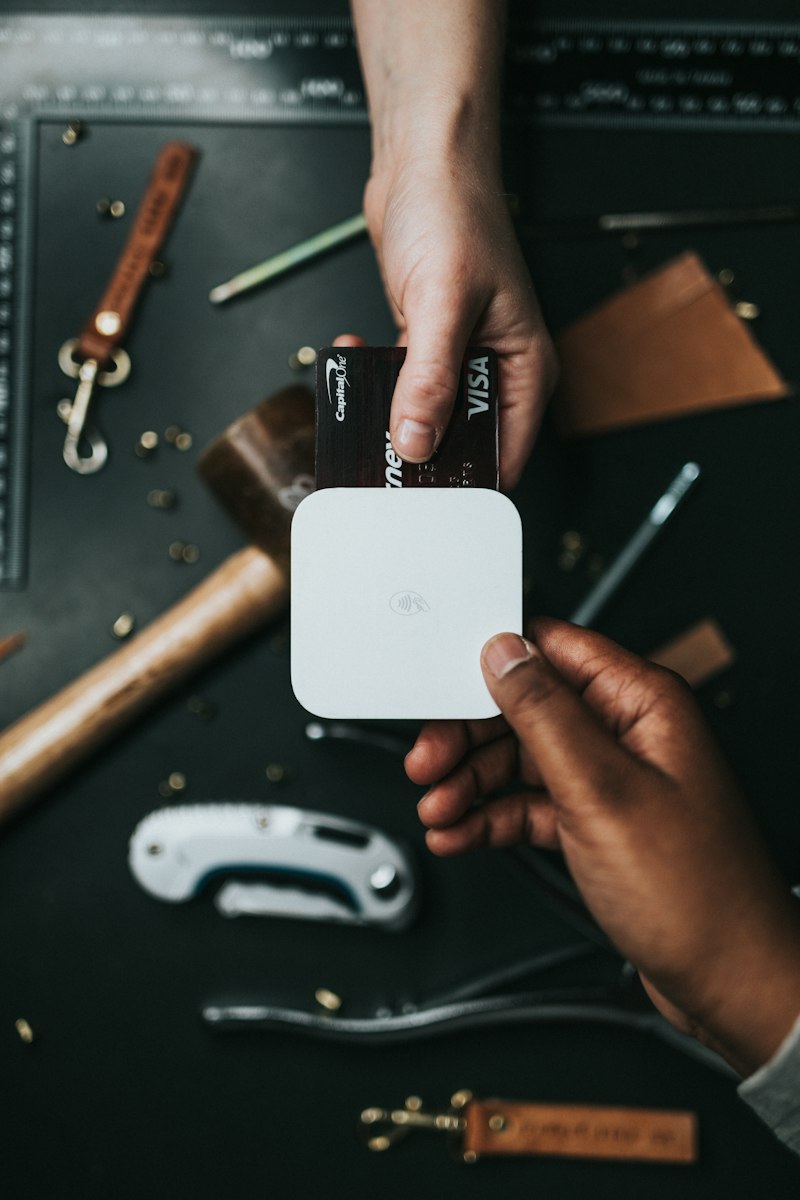
Picture this: you're abroad, paying for a purchase with your credit card. The terminal prompts you with a choice: "Pay in [local currency] or [your home currency]?" It sounds helpful—see the charge in familiar money. But this option, called Dynamic Currency Conversion (DCC), is almost always a terrible deal.
When you choose to pay in your home currency, the merchant (or more precisely, their payment processor) converts the amount for you using an exchange rate they set. This rate typically includes a substantial markup over the mid-market rate—on top of any fees your own card charges.
The only advantage of DCC is that you see the exact amount in your currency before confirming. But you can easily estimate this yourself using the current rate on SnapExchangeRates. That moment of convenience simply isn't worth the substantial fee.
Always choose to pay in the local currency, letting your own card handle the conversion. If a merchant or ATM automatically shows you the amount in your home currency, ask them to void the transaction and process it in the local currency instead. This single habit can save you hundreds of dollars over time.
Strategic ATM Usage
Despite the rise of cards, cash remains necessary in many destinations. ATMs are often the most cost-effective way to obtain local currency, but only if you use them wisely.
First, understand your own bank's fee structure. Many banks charge a flat fee per foreign ATM withdrawal plus a percentage of the amount. Some banks have partnerships with international banks that waive or reduce these fees—check if your bank participates in any global ATM networks.
Second, use bank-owned ATMs rather than independent operators. ATMs in convenience stores, tourist areas, or labeled with generic names often charge much higher fees and offer worse exchange rates than ATMs from major banks. Look for ATMs inside or adjacent to bank branches.
Third, withdraw strategically. Given flat fees per transaction, it often makes sense to withdraw larger amounts less frequently rather than many small withdrawals. Of course, balance this against security considerations—don't carry more cash than you're comfortable with.
Finally, decline any offer to have the ATM convert the currency for you (another form of DCC). Always choose to be charged in the local currency.
Worst Places to Exchange Currency
Some exchange venues are almost guaranteed to offer poor rates. Knowing where not to exchange is as important as knowing where to find good rates.
Airport currency exchanges top the list of places to avoid. Their captive audience of travelers who need money immediately allows them to charge enormous markups. If you arrive without any local currency, use an airport ATM instead—even with fees, you'll usually do better than the exchange kiosk.
Hotel exchange services are similarly expensive. They profit from guests who prioritize convenience over cost. The rate at your hotel's front desk is consistently worse than what you'd find at a local bank.
Tourist-area exchange shops vary wildly, but many exploit their location to charge inflated fees. If you must use one, compare several before committing, and always calculate the effective rate you're being offered against the mid-market rate.
Even your home bank can be expensive for currency exchange. Traditional banks often offer uncompetitive rates for retail currency exchange, especially for less common currencies. However, ordering currency from your bank in advance is sometimes still better than airport exchanges—do the math for your specific situation.
Planning for Cash-Dependent Destinations
Some destinations are simply more cash-dependent than others. In highly-developed countries with universal card acceptance, you can minimize cash and thus minimize exchange concerns. But in countries where cash is king, you'll need a more deliberate strategy.
Research your destination before departure. Look for information about card acceptance, availability of ATMs, and whether your cards will work there (some countries have compatibility issues with certain card types). Online travel forums are excellent sources for current, practical information from recent visitors.
If you'll need significant cash, consider exchanging a portion before you leave. While this isn't always the cheapest option, it eliminates the risk of arriving and being unable to access money. The peace of mind may be worth a small fee premium.
Also consider your backup plan. What if your primary card is lost, stolen, or blocked by fraud protection? Having a secondary card from a different bank, and perhaps some emergency cash, can save a trip from disaster.
Putting It All Together
Minimizing currency exchange fees isn't about finding one perfect solution—it's about building a system that works for your travel patterns. Here's a practical framework:
For everyday card spending abroad, use a credit card with no foreign transaction fees. For cash needs, use a modern multi-currency debit card or a traditional bank card with reasonable foreign ATM policies. Always decline Dynamic Currency Conversion. Avoid airport exchanges, hotel desks, and tourist-trap exchange shops.
Before each trip, check the mid-market rate so you can evaluate any exchange offers you receive. After your trip, review your statements to see what fees you actually paid—this helps you refine your approach for next time.
The effort you put into optimizing your currency exchange approach pays dividends on every future trip. A traveler who optimizes currency costs compared to a naive approach ends up with an extra few hundred dollars after every international journey. Over a lifetime of travel, that's real money—money better spent on experiences than on fees.
Foreign Transaction Fees by Card: What US Issuers Actually Charge
The foreign transaction fee is the single most avoidable cost in international travel, because it is a property of the card in your wallet rather than anything you do abroad. A 3% fee on $4,000 of holiday spending is $120 handed over for nothing. The table below lists the standard published rates for widely held US cards so you can check what you are carrying before you fly.
Short answer: a typical US foreign transaction fee is 3% of every purchase abroad, and Capital One, Discover, Chase Sapphire and American Express travel cards charge 0%. Checking this one line in your cardholder agreement before you fly is the highest-value minute you will spend on trip planning.
| Card / issuer | Foreign transaction fee | Cost on $4,000 abroad | Notes |
|---|---|---|---|
| Capital One (all cards) | 0% | $0 | Issuer-wide policy across credit and debit products. |
| Discover it | 0% | $0 | No FX fee, but acceptance abroad is limited outside the US. |
| Chase Sapphire Preferred / Reserve | 0% | $0 | Uses the Visa wholesale rate. |
| Amex Platinum / Gold | 0% | $0 | Acceptance is weaker than Visa/Mastercard in Europe and Asia. |
| Chase Freedom / Freedom Unlimited | 3% | $120 | Common everyday card — a frequent and costly travel mistake. |
| Citi Double Cash | 3% | $120 | No-FX-fee alternatives exist within the same issuer. |
| Bank of America (most consumer cards) | 3% | $120 | Preferred Rewards tiers do not remove the FX fee. |
| Wells Fargo (most consumer cards) | 3% | $120 | Autograph card is the notable 0% exception. |
| Typical credit union debit card | 1% | $40 | Often the network fee only, with no issuer markup on top. |
| Wise multi-currency card | 0% + 0.4–0.8% conversion | $16–32 | Mid-market rate with an explicit, disclosed fee. |
| Revolut (standard plan) | 0% within monthly allowance | $0–20 | Weekend markup of ~1% applies when FX markets are closed. |
Published standard rates as of 2026 for consumer cards; promotional and business variants differ. Cost column assumes $4,000 of card spending abroad. Always confirm the current fee in your cardholder agreement.
Two conclusions follow directly from the table. First, the difference between the best and worst card in your wallet is roughly $120 per trip for a typical traveller—more than most people save through any other currency strategy combined. Second, a 0% foreign transaction fee card only delivers its full advantage if you also decline Dynamic Currency Conversion at the terminal, because DCC applies its own markup before the card network ever sees the transaction.
Frequently Asked Questions
What are the most common hidden fees in currency exchange?
The biggest hidden fee is the exchange rate markup—the gap between the mid-market rate and the rate you're offered. Other hidden fees include foreign transaction fees (often around 3% on standard cards), ATM withdrawal fees, and 'zero commission' services that compensate with worse rates.
Are airport currency exchanges always bad?
Generally yes. Airport exchanges charge some of the steepest markups above mid-market rates, plus explicit fees. If you must exchange at the airport, convert only the minimum needed for immediate transportation. Use a bank ATM at the airport instead for a much better rate.
What cards have no foreign transaction fees?
Many premium travel credit cards waive foreign transaction fees, including popular options from major issuers such as Capital One, Discover, Chase Sapphire and Amex travel cards. Fintech cards like Wise and Revolut also have minimal fees. Check your card's terms before traveling—the standard 3% fee on ordinary cards adds up quickly.
Is it cheaper to pay in local currency or my home currency abroad?
Always pay in the local currency. When a merchant or ATM offers to charge you in your home currency (Dynamic Currency Conversion), they build in a significant markup of their own. Paying in local currency lets your bank handle the conversion at a much better rate.