Europe represents one of the world's most popular travel destinations, drawing millions of visitors each year to its historic cities, stunning landscapes, and rich cultural heritage. Yet navigating European currencies can be surprisingly complex. While the Euro dominates much of the continent, several major destinations maintain their own currencies, each with unique considerations for travelers. This comprehensive guide will help you manage money smoothly whether you're exploring the cafés of Paris, the pubs of London, or the peaks of Switzerland.
Understanding the Eurozone
The Euro is used by 20 of the 27 European Union member states, creating a monetary union that makes travel across much of Europe remarkably convenient. Once you have Euros in your pocket, you can spend them in Germany, France, Italy, Spain, Portugal, the Netherlands, Belgium, Austria, Greece, Ireland, and many other countries without ever thinking about exchange rates.
This convenience is the Euro's greatest advantage for travelers. A single withdrawal or exchange provides spending money across multiple countries. You can plan a trip through several Eurozone nations without the hassle and expense of exchanging currency at each border. The mental math is simpler too—once you've developed an intuition for Euro prices, it applies everywhere in the zone.
The Euro is also one of the world's most stable and widely-traded currencies. Exchange rates to USD are readily available, spreads are tight, and you'll have no trouble finding ATMs or places to exchange money. Major credit cards are widely accepted throughout the Eurozone, though cash remains important for smaller purchases, especially in southern and eastern Europe.
The United Kingdom and the British Pound
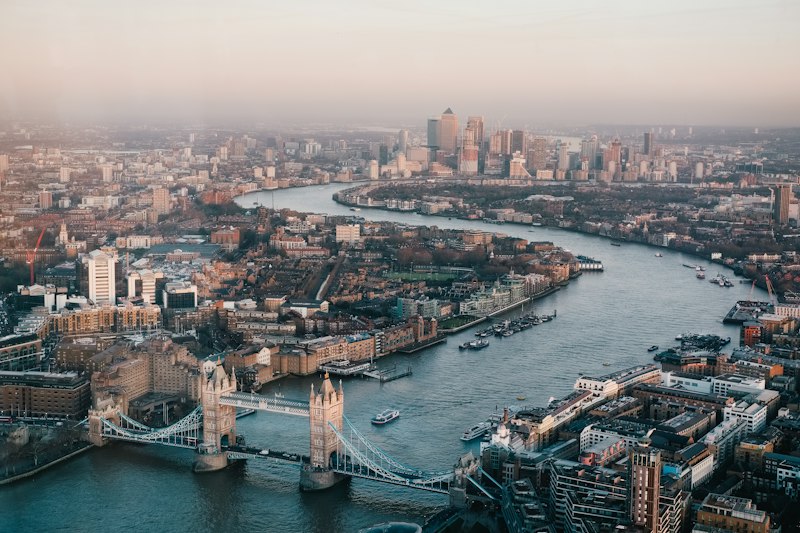
Despite its proximity to the Eurozone, the United Kingdom maintains its own currency: the British Pound Sterling, often simply called "the Pound." If your European trip includes England, Scotland, Wales, or Northern Ireland, you'll need to plan for this separate currency.
The Pound is typically stronger than both the US Dollar and the Euro, meaning prices in the UK will involve smaller numbers than you might expect. A hotel room might be listed at £150 rather than €180 or $200. This can be psychologically misleading—the lower number doesn't mean lower prices. In fact, the UK is generally one of Europe's more expensive destinations, and London particularly so.
Card acceptance in the UK is excellent, particularly for contactless payments, which are ubiquitous. Many smaller vendors and market stalls now accept cards where they once required cash. However, some pubs, small shops, and rural areas still prefer cash, so having some Pounds on hand is advisable.
A quirk of the UK system: Scotland issues its own banknotes through several banks, and these are legal currency throughout the UK. However, some vendors in England may be unfamiliar with Scottish notes and reluctant to accept them. If you receive Scottish notes, spending them in Scotland or exchanging them before heading south is often easiest.
Switzerland and the Swiss Franc
Switzerland, famously neutral and independent, maintains its own currency: the Swiss Franc (CHF). This small country in the heart of Europe is not part of the EU or the Eurozone, and its currency reflects its reputation for stability and financial sophistication.
The Swiss Franc is known as a "safe haven" currency—during times of global uncertainty, investors often flock to Swiss Francs, driving up its value. This tendency, combined with Switzerland's high standard of living, makes the country one of Europe's most expensive destinations. Travelers from the US often experience significant sticker shock at Swiss prices.
The good news is that Switzerland is extremely well-organized and modern when it comes to payments. ATMs are plentiful, cards are widely accepted, and many places (especially in tourist areas) will also accept Euros—though typically at unfavorable exchange rates. For the best value, use Swiss Francs obtained from ATMs or exchanged at favorable rates before arrival.
If you're visiting Switzerland as part of a larger European trip, consider it a separate financial destination. Don't assume your Euros will be accepted, and plan to have Swiss Francs specifically for this portion of your journey.
Scandinavian Currencies
The Nordic countries present a patchwork of currency situations. Finland uses the Euro, but Sweden, Norway, and Denmark each maintain their own currencies: the Swedish Krona (SEK), Norwegian Krone (NOK), and Danish Krone (DKK).
Despite having different names, these three currencies share similar characteristics. They're abbreviated with three letters (the last being K or Kr for crown/krone), they trade at roughly similar values to each other, and they're all weaker than the US Dollar, meaning you'll receive more Kroner per Dollar than you would Euros or Pounds.
Scandinavia is famously moving toward cashless societies, particularly Sweden, where many businesses no longer accept cash at all. Credit and debit cards are essential for travel here, and you'll want to ensure your cards work for contactless payments. Some visitors to Sweden have been surprised to find that even street vendors and small cafés are card-only.
Norway, while not as cashless as Sweden, is similarly card-friendly and expensive. Its status as a major oil producer affects the Krone's value—when oil prices rise, the Norwegian Krone tends to strengthen. Denmark falls somewhere in between and offers relatively good value compared to its Scandinavian neighbors.

Eastern European Currencies
Eastern Europe offers tremendous value for travelers, but navigating its currencies requires attention. Some countries—like Estonia, Latvia, Lithuania, Slovakia, and Slovenia—have adopted the Euro. Others maintain their own currencies with no immediate plans to change.
Poland uses the Złoty (PLN), Czech Republic the Czech Koruna (CZK), Hungary the Forint (HUF), and Romania the Leu (RON). Each of these currencies trades at significantly more units per Dollar than western European currencies, so you'll be dealing with larger numbers. A meal might cost 50 Złoty or 3,000 Forints—numbers that require recalibrating your price intuition.
The favorable exchange rates in these countries mean your travel budget stretches much further. High-quality restaurants, comfortable hotels, and memorable experiences are available at a fraction of western European prices. However, be vigilant about exchange rates—some tourist-area exchange offices offer terrible rates, knowing that tourists may not be familiar with the local currency.
ATMs are the safest option in eastern Europe, but watch for machines that offer to convert to your home currency (Dynamic Currency Conversion)—always decline this and let your bank handle the conversion.
Practical Tips for Multi-Currency European Travel
If your European adventure spans multiple currency zones, a few strategies will serve you well. First, consider a multi-currency card from a fintech provider like Wise or Revolut. These cards let you hold and spend multiple currencies with minimal fees, converting at near-interbank rates.
Second, don't try to pre-exchange for every currency you'll need. For brief stops or transits, ATM withdrawals on arrival are usually more efficient than accumulating small amounts of many currencies before your trip. Focus on obtaining larger amounts of currencies you'll use extensively.
Third, keep some Euros as emergency backup regardless of your specific destinations. The Euro is widely recognized across Europe, and even in non-Eurozone countries, you can often find someone willing to accept it in a pinch—though not always at favorable rates.
Finally, use SnapExchangeRates to check rates for each currency before and during your trip. Understanding the relative values helps you evaluate prices and ensures you recognize a bad exchange offer when you see one. Europe's diversity of currencies is part of its charm—with a little preparation, navigating them becomes part of the adventure rather than a source of stress.
European Currencies by Country: Card Acceptance, Cash Needs and ATM Fees
Europe uses far more currencies than most visitors expect, and the practical differences matter more than the exchange rate itself. The table below summarises what you will actually encounter country by country.
Short answer: the euro covers 20 countries, but the UK, Switzerland, Norway, Sweden, Denmark, Iceland, Poland, Czechia, Hungary, Romania and Turkey all keep their own currency. Cards work everywhere in Northern Europe; carry a little cash in Germany, Italy and Central Europe.
| Country | Currency | Eurozone | Card acceptance | Typical ATM fee |
|---|---|---|---|---|
| France | Euro (EUR) | Yes | Excellent | €0–3 |
| Germany | Euro (EUR) | Yes | Good — cash still common | €0–5 |
| Italy | Euro (EUR) | Yes | Good | €0–5 |
| Spain | Euro (EUR) | Yes | Excellent | €0–6 |
| Netherlands | Euro (EUR) | Yes | Near-cashless | €0–3 |
| United Kingdom | Pound Sterling (GBP) | No | Excellent | £0–2 |
| Switzerland | Swiss Franc (CHF) | No | Excellent | CHF 0–5 |
| Norway | Norwegian Krone (NOK) | No | Near-cashless | NOK 0–30 |
| Sweden | Swedish Krona (SEK) | No | Effectively cashless | SEK 0–50 |
| Denmark | Danish Krone (DKK) | No | Near-cashless | DKK 0–30 |
| Iceland | Icelandic Króna (ISK) | No | Effectively cashless | ISK 0–500 |
| Poland | Złoty (PLN) | No | Very good | PLN 0–15 |
| Czech Republic | Czech Koruna (CZK) | No | Very good | CZK 0–100 |
| Hungary | Forint (HUF) | No | Good | HUF 0–1,500 |
| Romania | Leu (RON) | No | Good | RON 0–20 |
| Croatia | Euro (EUR) | Yes (since 2023) | Good | €0–5 |
| Turkey | Turkish Lira (TRY) | No | Moderate | TRY 0–100 |
Sources: ECB euro-area membership list and published ATM operator fee schedules. ATM fees shown are the operator's charge only; your own bank may add a withdrawal fee and FX markup. Last reviewed July 2026 by The Snap Exchange Team.
Three things stand out. The Nordic countries are the most cashless region in the world—in Sweden and Iceland many businesses no longer accept banknotes at all, so exchanging cash before departure is usually wasted money. Germany and Italy remain the notable Eurozone exceptions where small businesses still prefer cash. And Central Europe offers the strongest value for visitors, but also the highest concentration of tourist-area exchange offices with deliberately poor rates—use bank ATMs instead, and always decline Dynamic Currency Conversion.
Frequently Asked Questions
Do all European countries use the Euro?
No. While 20 EU countries use the Euro, several popular destinations have their own currencies: the UK (Pound Sterling), Switzerland (Swiss Franc), Sweden (Krona), Norway (Krone), Denmark (Krone), Czech Republic (Koruna), Poland (Złoty), and Hungary (Forint).
Can I use credit cards everywhere in Europe?
Card acceptance varies by country. Scandinavia is nearly cashless, while Germany, Austria, and parts of Southern Europe remain cash-oriented. Major hotels and restaurants accept cards almost everywhere, but small shops, markets, and rural areas may require cash.
Should I exchange money before going to Europe?
It's not necessary for most European destinations. ATMs at European airports offer competitive rates. Bring a no-foreign-transaction-fee card and withdraw local currency upon arrival. Only pre-exchange if visiting remote areas with limited banking infrastructure.
What is the best currency to carry as backup in Europe?
Euros are the most widely recognized and accepted backup currency across Europe, even in non-Eurozone countries. In an emergency, Euros can usually be exchanged or accepted at most hotels and larger establishments throughout the continent.
Which European countries are cashless?
Sweden, Norway, Denmark, Iceland and the Netherlands are effectively cashless—many shops, cafés and museums no longer accept banknotes at all. In these countries a contactless card or phone wallet is all you need, and exchanging cash before departure is usually wasted money.
Which European countries still prefer cash?
Germany, Austria, Italy and much of rural Central and Eastern Europe still favour cash for small purchases. Bakeries, market stalls, taxis and small restaurants may refuse cards or set minimum amounts, so carry enough local currency for one to two days of expenses.
How much are ATM fees in Europe?
Operator fees at bank ATMs are usually €0–6 (or the local equivalent), and many bank-owned machines charge nothing. Standalone machines in tourist areas such as Euronet routinely charge more and offer poor conversion—use ATMs attached to a real bank branch.